On this page
Key takeaways
- Dermaplaning is a facial where a licensed esthetician uses a sterile blade to lift off dead skin and fine peach fuzz.
- Peach fuzz does not grow back thicker or darker. It can feel a little blunt for a few days because it was cut straight across.
- Skip it during a breakout, an eczema flare, or any irritation on your face. We'll check your skin first.
- Our Dermaplane Facial is $65 for 30 minutes, with little to no downtime.
Dermaplaning in St. Clair, MO is one of the quickest facials on our menu. One of our licensed estheticians uses a small sterile blade to gently lift off the dead skin and fine peach fuzz sitting on the surface of your face. It takes about 30 minutes, and you'll usually leave with skin that feels smoother and looks a little brighter.
It's also the facial people ask the most questions about, mostly because of one word: blade. So here's what it actually is, what it can and can't do, and when we'd tell you to wait.
What is dermaplaning?
Dermaplaning is a form of exfoliation. Your esthetician holds your skin smooth and glides a sterile blade over it at a low angle, in short, light strokes. The blade takes off two things at once: the layer of dead skin cells that makes skin look dull, and the soft, fine hair most of us have on our cheeks, jaw, and forehead, often called peach fuzz.
There's nothing to soak in and no acid. It's just a careful, manual exfoliation, which is why it suits a lot of people who can't use stronger products. Cleveland Clinic describes it as removing peach fuzz and dead skin to leave skin a little smoother and brighter, and notes that the professional version is done in a med spa or office with a tiny scalpel.
What does dermaplaning help with?
Dermaplaning is a surface treatment, so it's best for surface things. It can help with:
- Dull skin: taking off the top layer of dead cells can help your skin look brighter.
- Makeup that won't sit right: foundation goes on smoother when there's no fuzz or flaky skin for it to cling to.
- Skincare that just sits there: with the dead layer gone, your serums and moisturizer have less in the way.
- Peach fuzz you'd rather not see: especially in photos or in bright light.
What it won't do is change deeper things like acne scars, sun spots, or loose skin. For texture and scarring, microneedling goes further. For pigment and tone, a peel usually makes more sense. Our guide to medical facials walks through how the facials on our menu compare.
Will my hair grow back thicker after dermaplaning?
No. This is the number one worry we hear, and it's a myth. Dermaplaning cuts the fine hair at the surface of your skin. It doesn't touch the root, so it can't change how thick, dark, or fast your hair grows.
Here's why the myth sticks around. A hair that grows on its own has a soft, tapered tip. When it's cut straight across, the new tip is blunt, so for a few days it can feel a little coarser as it grows out. Cleveland Clinic dermatologist Dr. Melissa Piliang explains in the same article that trimming hair above the skin has no effect on how it grows, and the regrowth softens again as it lengthens.
What happens at a dermaplane facial?
A Dermaplane Facial with us takes about 30 minutes. Here's how it usually goes:
- A quick skin check. Your esthetician looks at your skin and asks about breakouts, sensitivity, and any prescription creams you use.
- Cleanse. Your face is cleansed and dried so the blade can glide.
- Dermaplaning. Short, light strokes across the cheeks, jaw, forehead, and the sides of the face. It usually feels like a light scraping.
- Finish. Your esthetician finishes with products chosen for your skin, then moisturizer.
It shouldn't hurt. If anything feels sharp or uncomfortable, say so and your esthetician will adjust.
Who should skip dermaplaning?
Dermaplaning is gentle, but it's not for every skin on every day. We'll hold off if you have:
- An active breakout. Running a blade over inflamed pimples can irritate them and spread bacteria. Cleveland Clinic also says to skip it in the middle of a breakout.
- An eczema or psoriasis flare, a rash, or a sunburn. Let it calm down first.
- A cold sore. Wait until it has fully healed.
- Very thin or fragile skin from a prescription cream. Retinoids and some acne medicines can make skin more delicate, so tell us what you use.
If breakouts are the bigger issue for you, ask us about facials and peels first, and dermaplaning can come later once your skin has settled.
Is there downtime after dermaplaning?
Most people have little to none. Your skin may look a little pink for a few hours, especially if you're fair or sensitive. You can usually go right back to your day.
For the next couple of days, keep it simple:
- Wear sunscreen. Fresh skin is more sensitive to sun, so protect it every day.
- Moisturize. Your skin barrier will thank you.
- Hold off on scrubs and strong acids for a few days so you don't over-exfoliate.
How often should you get dermaplaning?
Peach fuzz and dead skin both come back on their own schedule, so dermaplaning isn't a one-and-done. Once a month is a common rhythm, and it lines up with how often many of our clients already come in for a facial. Your esthetician will suggest a schedule that fits your skin after your first visit.
How much does dermaplaning cost in St. Clair?
Our Dermaplane Facial is $65 for 30 minutes. It's one of the least expensive ways to try a facial with us, and your consult is free if you'd like to talk it through first. You can see every facial and price on our facials page.
If you're getting ready for an event, dermaplaning is a nice one to book a few days ahead. You get the smooth makeup without any real recovery time. For a deeper clean and hydration in the same week, our hydrodermabrasion facial guide explains how that one works.
Should you dermaplane at home?
You can buy small face razors at the drugstore, and lots of people use them. If you do, go slowly, use a clean blade, and don't do it more than about once a week. The bigger risks at home are nicks, irritation, and bacteria from a dirty blade. A licensed esthetician uses a sterile blade, knows the right angle, and can tell when your skin isn't up for it that day.
Want to try it the easy way first? Book a free consult or a Dermaplane Facial and come see us on Chestnut Street in St. Clair. We'll look at your skin and tell you honestly whether dermaplaning is the right pick.
Disclaimer: This content is for informational purposes only and is not medical advice. Results vary by individual. Talk with a licensed provider about what's right for your skin.
Related treatment
Questions people ask
What is dermaplaning?
Dermaplaning is a facial where a licensed esthetician uses a sterile blade to gently lift off dead skin cells and fine peach fuzz. It's a manual exfoliation with no acid, and a Dermaplane Facial with us takes about 30 minutes.
Does hair grow back thicker after dermaplaning?
No. Dermaplaning only cuts the fine hair at the surface. It doesn't change the root, so it can't make hair thicker, darker, or faster. Regrowth can feel a little blunt for a few days, then softens as it grows.
Can I get dermaplaning if I have acne?
Not during an active breakout. A blade over inflamed pimples can irritate them. We'll suggest a facial or peel for the breakouts first, and dermaplaning once your skin has calmed down.
How long does dermaplaning last?
Peach fuzz and dead skin come back over a few weeks, so the smooth feeling fades gradually. Once a month is a common rhythm. Your esthetician will suggest a schedule for your skin.
How much is dermaplaning in St. Clair, MO?
Our Dermaplane Facial is $65 for 30 minutes. The consultation is free if you want to ask questions before you book.
Written by the Just Face It team

Stephanee Click, RN, MSN, FNP-BC
Owner

Grace, RN
Injector

Claire, RN
Injector
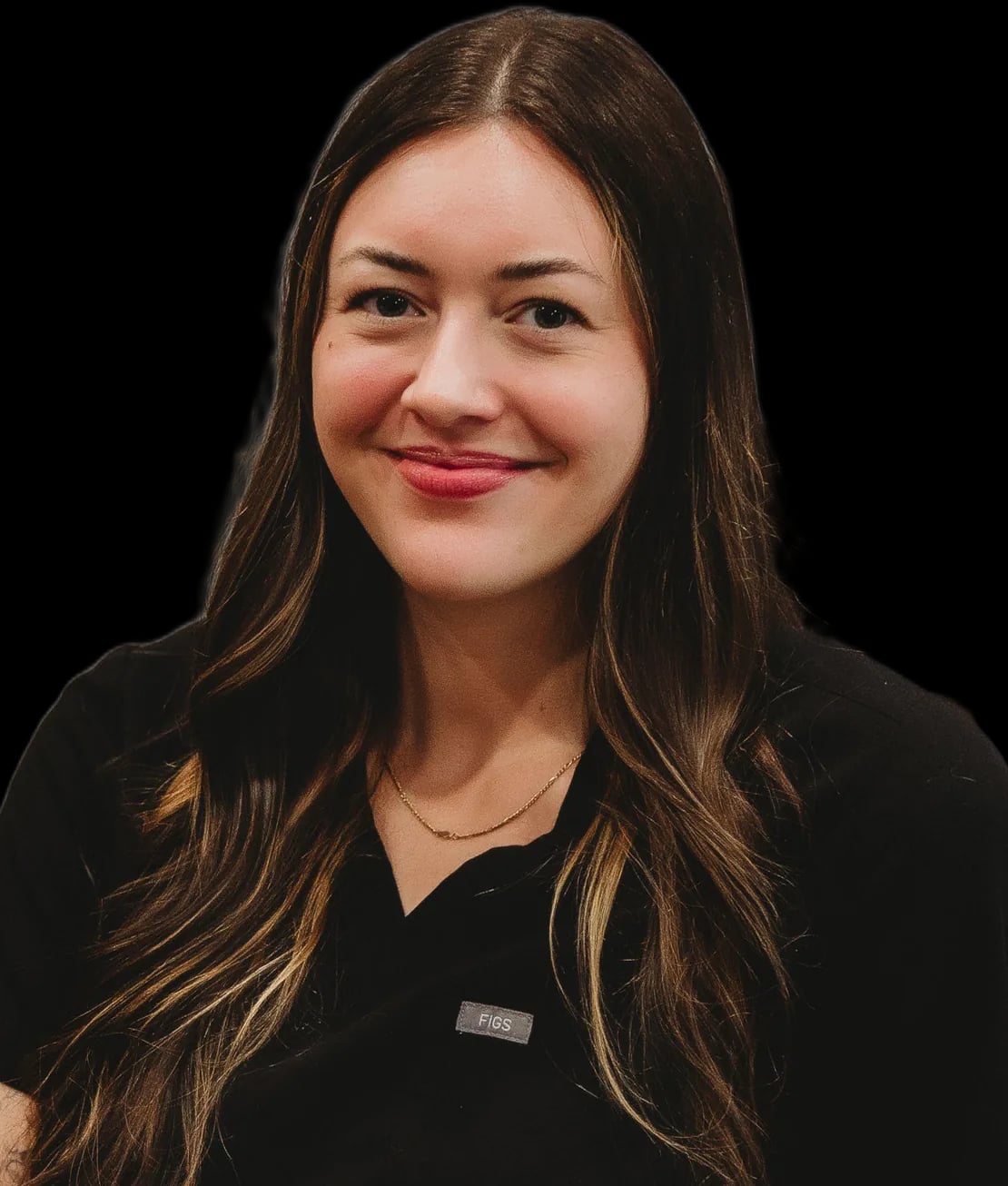
Maggie
Esthetician

Kaylee
Esthetician
Free consults