On this page
Key takeaways
- A PRP facial is microneedling with plasma made from your own blood, spun down from a small tube drawn at your visit.
- It can help improve the appearance of texture and acne scarring, and the research is strongest for acne scars. Results vary.
- Expect mild redness for about 24 to 48 hours, and plan on a series of 3 visits spaced 4 to 6 weeks apart.
- Our PRP "Vampire" Facial is $350 a session, and every plan starts with a free consult.
- Where you go matters: ask who draws your blood and what their license is, and skip it if you have certain blood conditions.
A PRP facial in St. Clair, MO is microneedling with a serum made from your own blood. We draw a small tube from your arm, spin it down to pull out the plasma, and work that plasma into your skin during microneedling. It's the treatment on our menu called the PRP "Vampire" Facial, and it's one of the most asked about (and most worried about) things we do. So here's the honest version: what it is, what it feels like, what it costs, who it suits, and who should skip it.
If you've been reading about it online, you've probably seen two kinds of posts. One says it's a miracle. The other says it's scary. We'd rather you hear it from the nurses who actually do it, in a calm room, before you decide anything.
What is a PRP facial?
A PRP facial is microneedling combined with platelet-rich plasma, or PRP, which is the part of your blood that carries platelets and growth factors. The microneedling makes tiny controlled channels in the skin, and the plasma is applied during and after so it can work alongside your skin's own repair process. Most people book it to help improve the appearance of texture, acne scarring, and dullness.
The idea behind it is simple. Microneedling already prompts your skin to build new collagen. According to Cleveland Clinic dermatologist Dr. Shilpi Khetarpal, PRP and microneedling both stimulate collagen and work well together, which is why they're paired. You can read her full explanation from Cleveland Clinic.
Your body builds the collagen. We just start the process.
That's how we put it on our microneedling page, and it's still the best one-line summary we've got. The plasma doesn't add anything foreign to your skin. It's yours.
How is a PRP facial different from regular microneedling?
The difference is what goes on your skin during the treatment. Regular microneedling uses a hydrating serum. A PRP facial uses plasma from your own blood instead, which adds a blood draw and a few extra minutes to the visit. The microneedling part, the numbing, and the aftercare are very similar between the two.
So does the plasma actually make a difference? This is where we try to be straight with you. The research is still growing, and the American Academy of Dermatology is careful to say there's limited evidence either way for PRP on its own, partly because the FDA classifies PRP as a device and doesn't require the large studies a new drug would need.
For acne scars specifically, the picture is more encouraging. A 2022 meta-analysis in Frontiers in Medicine pooled 14 controlled studies with 472 people and found that adding PRP to microneedling was linked to about three times the odds of more than 50% improvement in acne scars compared with microneedling alone, without a significant rise in severe redness or swelling. That's real, but it's also a research average. Results vary, and your skin is the only study that matters to you.
If you want to compare microneedling with the other big texture treatment, our guide to microneedling vs chemical peel lays the two side by side.
What does a PRP facial help with?
A PRP facial can help improve the appearance of uneven texture, shallow acne scarring, enlarged-looking pores, fine lines, and skin that just looks tired. It's a gradual treatment that works with your own collagen, so it's best for people who are happy to build results over a series of visits rather than expecting a big change after one.
Here's what the girls hear most often in the chair when someone asks about it:
- Acne scarring: the textured, pitted kind that makeup sits in. This is where the research above is strongest.
- Texture and pores: skin that feels rough or looks uneven up close.
- Fine lines: the early, fine kind, especially around the eyes and cheeks.
- That dull, worn-out look: when your skin just isn't giving you any glow.
What it won't do is lift loose skin in a big way or replace lost volume. Cleveland Clinic's Dr. Khetarpal says it plainly: nonsurgical treatments give nonsurgical results. If loose skin along the jaw or neck is what bothers you most, Ultherapy or RF microneedling may be a better fit, and we'll tell you that at your consult.
What happens at a PRP facial appointment?
A PRP facial visit has four parts: a quick blood draw, spinning the blood to separate the plasma, numbing, and microneedling with your plasma. You'll go over your skin and health history with us first, and the whole thing happens in one of our calm, candlelit treatment rooms.
Here's how it goes, step by step:
- Your free consult first. We look at your skin, ask about your health and any medications, and make sure a PRP facial actually makes sense for what you want.
- The blood draw. We take a small tube of blood from your arm, a lot like a routine lab draw.
- The spin. Your tube goes into a centrifuge, which separates the plasma from the rest of your blood.
- Numbing. We put numbing cream on your face about 30 minutes before we start, so you're comfortable.
- Microneedling with your plasma. We microneedle your skin and work your plasma in during and after the treatment.
If needles make you queasy, tell us. Seriously. You can look away during the draw, and you won't be the first person to ask us to talk you through it. We can also go over Pro-Nox, the comfort option we offer with microneedling, when you come in. And for the record, nobody here is wearing a cape. The "vampire" part is just the blood.
Does a PRP facial hurt?
Most people describe a PRP facial as pressure and warmth rather than pain, because numbing cream goes on about 30 minutes before the microneedling starts. The blood draw is a quick pinch, like any lab visit. Bony spots like the forehead and the area around the nose can feel a bit more intense than the cheeks.
Everyone's comfort level is different, and that's okay. If you're nervous, that's worth saying out loud at your consult. We'd much rather slow down and make you comfortable than have you white-knuckle it. The American Academy of Dermatology notes you may have a bit of pain, bruising, and swelling afterward, so plan for that rather than being surprised by it.
How long does redness last after a PRP facial?
Expect mild redness for about 24 to 48 hours after a PRP facial, a lot like a light sunburn. Most clients go back to their normal day, though you'll want to skip makeup, heavy workouts, and sun for the first 24 hours. Some people also notice a little bruising or swelling, which usually settles on its own.
A few honest tips for the first couple of days:
- Keep it gentle. Skip scrubs, retinol, and strong acids until your skin has calmed down.
- Wear sunscreen. Your skin is more sensitive right after microneedling, so protect it every day.
- Plan around it. If you have a wedding or a big photo day, give yourself at least a few days between your PRP facial and the event.
If anything feels off, like redness that's getting worse instead of better, call us. That's what we're here for.
How many PRP facial sessions do you need?
Most people do a PRP facial as a series of 3, spaced about 4 to 6 weeks apart, then come back for maintenance. One session can give your skin a fresh look, but collagen builds slowly, so the series is where most people see the most meaningful change. We'll build the schedule around your skin and goals.
That rhythm lines up with what the research suggests. The American Academy of Dermatology reports that most people who get results from PRP have 3 or more treatments, and Cleveland Clinic describes a series spaced 4 to 6 weeks apart with maintenance after.
How much does a PRP facial cost in St. Clair?
Our PRP "Vampire" Facial is $350 per session, and microneedling with PRP is listed at the same price on our microneedling menu. Your consult is free, so you can come in, ask every question on your list, and get a real plan and price before you spend anything. Financing is available through Cherry, subject to approval.
Since most plans are a series of 3, it's worth thinking about the total up front. We'd rather you know the real number from day one than feel surprised at checkout. You can see every treatment and price on our facials page.
Is a PRP facial the same as Derma PRP?
No, and it's an easy mix-up because both use your own plasma. The PRP facial is applied to the skin with microneedling. Derma PRP is different: your plasma is processed into a gel and injected by our nurses to help improve the appearance of volume and skin quality. It's $350 for one session or $900 for three at our intro price. If you're not sure which one fits what you want, that's exactly what the consult is for.
Is a PRP facial safe?
A PRP facial is considered safe for most healthy adults when it's done by trained medical staff in a clean, licensed setting, because the plasma comes from your own body. The biggest risk comes from how the blood and needles are handled, which is why where you go matters as much as what you book.
In 2024, the CDC published an investigation of HIV infections linked to PRP microneedling facials at an unlicensed spa in New Mexico. Investigators found unwrapped syringes, unlabeled blood tubes stored with food, and reused disposable tips. Five people were confirmed to have spa-linked HIV. The CDC's recommendations were about infection control, licensing, and keeping client records.
So, wherever you book, ask who draws your blood, who does the microneedling, and what their license is. At Just Face It, our medical treatments are done under the supervision of our nurse practitioner, Stephanee Click, RN, MSN, FNP-BC. If you're comparing places, our guide on how to choose a med spa has a short checklist.
Who should not get a PRP facial?
A PRP facial isn't right for everyone. The American Academy of Dermatology says it's not recommended for people with hepatitis C, HIV or AIDS, or any type of blood cancer, and Cleveland Clinic adds people with clotting conditions that need blood thinners. Tell us about every medication and condition at your consult.
We'll also talk it through if you have an active breakout, a rash, or anything irritated on your face, since we don't microneedle over angry skin. We ask because we want the treatment you book to be safe for you and actually likely to help.
Is a PRP facial worth it?
A PRP facial is worth it for people who want gradual, natural-looking improvement in texture and scarring and are happy to commit to a series. It's probably not the right pick if you want a quick event glow or a big lift. For that, a NanoBlur or hydrodermabrasion facial or a different treatment may suit you better.
Here's the honest way we think about it. If your main frustration is acne scarring or rough texture, and you're okay with a couple of red days and a few visits, a PRP facial is a solid option to talk about. If you're not sure, the consult costs nothing, and you'll leave with a clear answer either way, even if that answer is "not this one."
Ready to chat it through? Book a free consult and come see us on Chestnut Street in St. Clair. Take a seat, ask us anything, and we'll make a plan that makes sense for your face and your budget. If you'd rather talk first, give us a call at (636) 322-1122.
Disclaimer: This content is for informational purposes only and is not medical advice. Cosmetic results vary by individual and are not guaranteed. A PRP facial is a medical treatment that should be chosen and performed by a licensed provider, and a consultation determines what is appropriate for you.
Related treatment
Questions people ask
What is a PRP facial?
A PRP facial is microneedling combined with platelet-rich plasma made from your own blood. We draw a small tube of blood, spin it in a centrifuge to separate the plasma, then work that plasma into your skin during microneedling. Most people book it to help improve the appearance of texture, acne scarring, and dullness over a series of visits. Results vary.
Does a PRP facial hurt?
Most clients describe it as pressure and warmth rather than pain, because we apply numbing cream about 30 minutes before the microneedling starts. The blood draw is a quick pinch, like a routine lab visit. Bony areas like the forehead can feel a little more intense. If you're nervous about needles, tell us at your consult and we'll take it slow.
How long does redness last after a PRP facial?
Mild redness usually lasts about 24 to 48 hours, a lot like a light sunburn. Most people go back to their normal day, but skip makeup, heavy exercise, and sun for the first 24 hours. A little bruising or swelling can happen too. If redness gets worse instead of better, call us.
How many PRP facial sessions will I need?
Most plans are a series of 3 sessions spaced about 4 to 6 weeks apart, followed by maintenance visits. The American Academy of Dermatology reports that most people who see results from PRP have 3 or more treatments. We'll recommend a schedule based on your skin and goals at your free consult.
How much does a PRP facial cost at Just Face It?
Our PRP "Vampire" Facial is $350 per session, and microneedling with PRP is the same price. Since most plans are a series of 3, we'll go over the full cost with you up front at your free consult. Financing is available through Cherry, subject to approval.
Written by the Just Face It team

Stephanee Click, RN, MSN, FNP-BC
Owner

Grace, RN
Injector
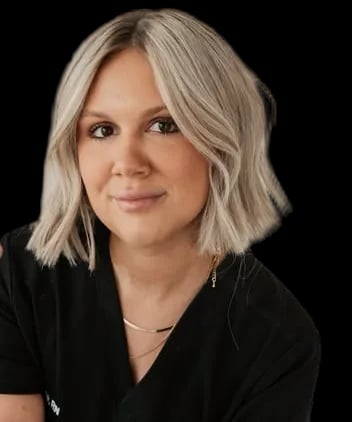
Claire, RN
Injector
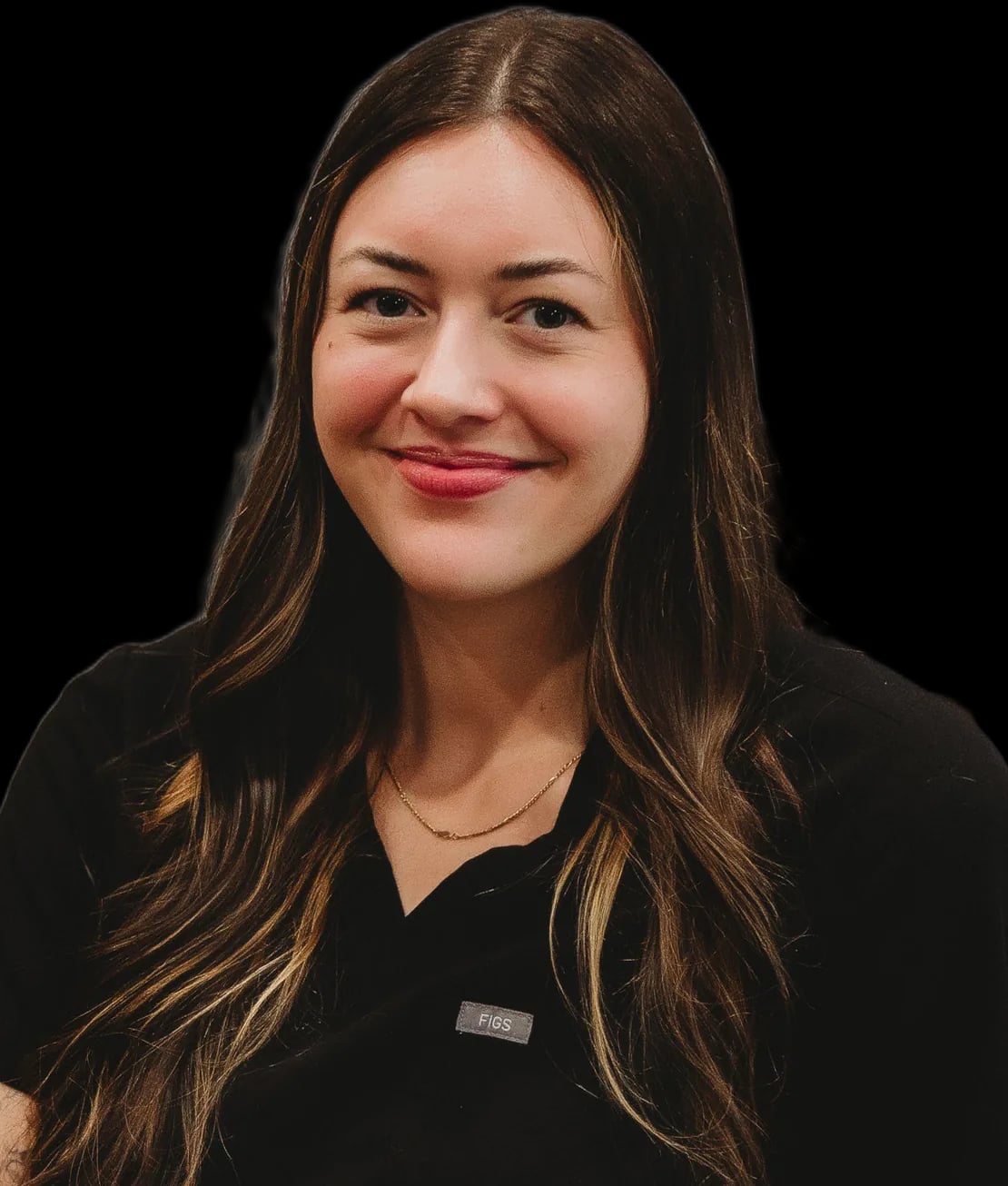
Maggie
Esthetician

Kaylee
Esthetician
Free consults